Tarok Online

How to play Tarok

Learn the basics in six short steps, then look up anything else in the rule reference.

The Deck

Tarok uses a unique 54-card deck — larger than a standard playing deck.

Deck Composition
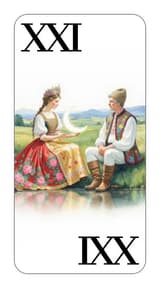
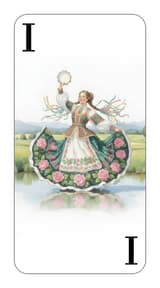
ŠkisMond (XXI)Pagat (I)

22

Taroki

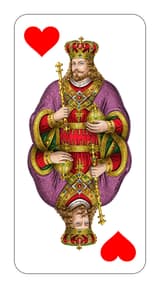
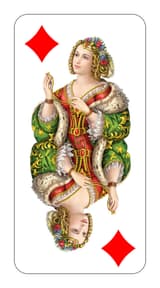
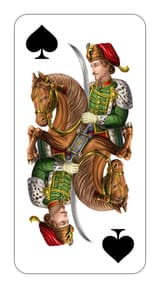
King ♥Queen ♦Knight ♠

32

Suit Cards (4×8)

The 4 suits are Hearts, Diamonds, Spades, and Clubs — each with 8 cards (King, Queen, Knight, Jack + 4 numeral cards).

Key Cards

These cards are worth the most points (5 each). Trula (Pagat, Mond, Škis) has a special rule — if all three appear in the same trick, the Pagat beats the Škis. Kings are called to choose a partner in 4-player games.
Pagat (I)
Pagat (I)
5 points
Mond (XXI)
Mond (XXI)
5 points
Škis
Škis
5 points
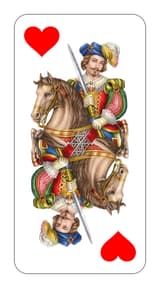
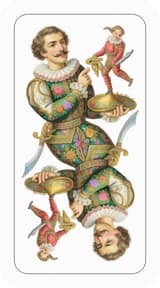
King ♥
King ♥
5 points
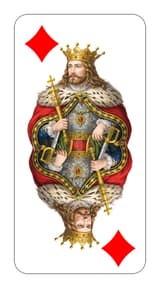
King ♦
King ♦
5 points
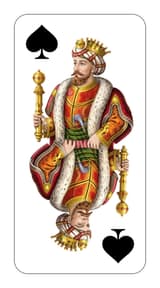
King ♠
King ♠
5 points
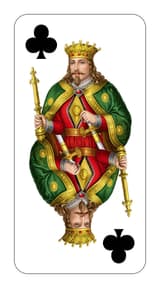
King ♣
King ♣
5 points

Rule reference

Every contract, bonus and special case, when you need it.

What is Tarok?

Tarok (also known as Tarock or Slovenian Tarok) is a traditional trick-taking card game for 3 or 4 players. It uses a special 54-card deck consisting of 22 taroki and 32 suit cards across four suits: Hearts, Diamonds, Spades, and Clubs.

The goal varies by game mode — in most contracts, the declarer tries to collect more than 35 card points out of 70 total. In negative games like Klop or Berač, the objective is reversed.

Tarok is beloved across Central Europe, with Slovenian Tarok being one of the most popular and strategically rich variants.

Who Leads First?

In normal contracts (Tri through Solo Ena), the player to the dealer's right (forehand) always leads the first trick, regardless of who is the declarer. In higher contracts (Berač and above), the declarer leads the first trick.

Trick leader:: The winner of each trick leads the next one.

Following suit

Pik 10

Pik 10

Player 1 (leads)

Pik Dama

Pik Dama

Player 2

Wins!
Pik 7

Pik 7

Player 3

Pik 9

Pik 9

Player 4

Player 1 leads Pik 10. Everyone follows suit. Pik Dama (Queen) is the highest card of the led suit, so Player 2 wins the trick and leads next.

King Calling

How does king calling work?
In 4-player normal games (Tri, Dva, Ena), the declarer names a suit. The holder of the king of that suit becomes the declarer's secret partner — but doesn't reveal themselves. The partnerships often aren't discovered until late in the hand.
Calling your own king
It is legal to call a king you already hold. In this case you play alone against three opponents, but they won't realize it at first. This is generally not a strong strategy — declaring a solo contract brings 30 more base points.
King in the talon
If the called king happens to be in the talon, the declarer plays alone. If the king is in the unchosen part of the talon, the declarer can win those cards by picking up the part containing the called king and winning a trick with it.

Bidding Ladder

All contracts in bidding order, from lowest to highest

  1. 1Klop0 pts
  2. 2Tri10 pts
  3. 3Dva20 pts
  4. 4Ena30 pts
  5. 5Solo tri40 pts
  6. 6Solo dva50 pts
  7. 7Solo ena60 pts
  8. 8Berač70 pts
  9. 9Solo brez80 pts
  10. 10Odprti berač90 pts
  11. 11Barvni valat125 pts
  12. 12Valat500 pts

Klop and Tri cannot be bid — they are available only to forehand when all other players pass. During bidding you may only overcall with a higher contract, or match one if you have higher priority (closer to forehand).

Normal Games

Tri

10 pts
Partner

Declarer picks one half of the 6-card talon (3 cards) and exchanges cards from their hand.

Talon: 2 parts of 3 cards · Solo: No · First lead: Forehand

Dva

20 pts
Partner

Declarer picks one third of the talon (2 cards) and exchanges cards.

Talon: 3 parts of 2 cards · Solo: No · First lead: Forehand

Ena

30 pts
Partner

Declarer picks one sixth of the talon (1 card) and exchanges one card.

Talon: 6 parts of 1 card · Solo: No · First lead: Forehand

Solo Games

Solo tri

40 pts
Solo

Declarer plays alone against all others. Picks 3 cards from the talon.

Talon: 2 parts of 3 cards · Solo: Yes · First lead: Forehand

Solo dva

50 pts
Solo

Declarer plays alone. Picks 2 cards from the talon.

Talon: 3 parts of 2 cards · Solo: Yes · First lead: Forehand

Solo ena

60 pts
Solo

Declarer plays alone. Picks 1 card from the talon.

Talon: 6 parts of 1 card · Solo: Yes · First lead: Forehand

Solo brez

80 pts
Solo

Declarer plays alone without looking at the talon. Talon points go to the opposing team.

Talon: Not used (goes to opponents) · Solo: Yes · First lead: Declarer

Negative Games

Klop

0 pts
Negative

Everyone plays individually, trying to win as few points as possible. After each of the first six tricks, one talon card is turned face up and given to the trick winner. Zero tricks scores +70, more than 35 points scores −70, otherwise you score minus the points you took.

Talon: 1 gift card per trick (first 6 tricks) · Solo: No · First lead: Forehand

Berač

70 pts
SoloNegative

Declarer must not win a single trick. Cards are played with forced beating — you must play a higher card if you can.

Talon: Not used · Solo: Yes · First lead: Declarer

Odprti berač

90 pts
SoloNegative

Same as Berač, but declarer plays with cards face-up on the table for everyone to see.

Talon: Not used · Solo: Yes · First lead: Declarer

Special Games

Barvni valat

125 pts
Solo

Declarer must win all tricks. Taroki do not beat suit cards — strict suit following only. The highest card in the led suit wins.

Talon: Not used · Solo: Yes · First lead: Declarer

Valat

500 pts
Solo

Declarer must win every single trick. Normal tarok rules apply. Worth 500 points — the ultimate contract.

Talon: Not used · Solo: Yes · First lead: Declarer

Card Point Values

Each card has a point value used for scoring. Points are counted in batches of three.

CardPoints
Kings5
Queens4
Knights3
Jacks2
Pagat (I), Mond (XXI), Škis5
All other cards1

Counting Points — Batch of Three

After all tricks are played, collected cards are grouped into batches of three. For each batch, sum the individual point values and subtract 2. If there is a remainder of 1 or 2 cards that don't form a full batch, subtract 1 from their sum.

Total = Σ(card points) − 2 × (number of full batches) − (1 if remainder exists)
Example batch
King ♥
King ♥+5
Queen ♦
Queen ♦+4
Tarok VII
Tarok VII+1

5 + 4 + 1 − 2 = 8 points

The maximum possible score is 70 points. The threshold to win a normal game is 36 points (more than half of 70).

Normal Game Scoring

For game modes Tri, Dva, Ena, Solo tri, Solo dva, and Solo ena

The difference is calculated as the declarer's card points minus 35, rounded to the nearest 5.

Score = (Game Worth + Difference) × 2^kontra

If the declarer scores 36+, they win. The score is positive for the playing team and negative for the opposing team (and vice versa on a loss).

Predictions & Bonuses

Announcements made before play that affect scoring

BonusUnannouncedAnnouncedFailed
Trula+10+20−20
All Kings+10+20−20
Pagat Ultimo+25+50−50
King Ultimo+10+20−20
Valat+250+500−500
Captured Mond−21 penalty to Mond player (−42 if Mondfang was announced)

The game, Pagat Ultimo, King Ultimo, the Valat announcement, and Mondfang each have their own independent kontra chain (×2, ×4, ×8, ×16). Trula and All Kings announcements are flat ±20 and cannot be kontra'd. If Valat is announced and achieved, all other scoring is replaced by the Valat score.

Direction matters: if the defenders sweep all three Trula cards or all four Kings unannounced, the declarer scores −10 for that line. Likewise, an unannounced Valat scores +250 for the declarer's side — or −250 if the defenders take every trick.

Kontra Chain

During the announcement phase, the defending side may double the score for the game or a kontrable bonus by saying "Kontra". The declaring side can then double again, and so on.

  1. Kontra ×2
  2. Rekontra ×4
  3. Subkontra ×8
  4. Mordkontra ×16

Each level doubles the multiplier. The game, Pagat Ultimo, King Ultimo, the Valat announcement, and Mondfang are kontra'd independently — you specify exactly what you're doubling. Trula and All Kings cannot be kontra'd.

Radelci (Bonus Rounds)

Score multipliers that reward active play

What are radelci?
Radelci are bonus markers given to all four players after certain events. When a declarer who holds radelci plays a contract, that hand's score is doubled. The radelc is cancelled only if the declarer wins — on a loss the score is still doubled but the radelc stays.
When are radelci awarded?
  • A round of Klop is played
  • A contract of Berač or higher is played
  • Any kind of Valat is won or lost
End-of-game penalty
At the end of the session, 100 points are subtracted from each player's score for every uncancelled radelc. This encourages players to actively declare contracts rather than always passing.

Worked Example — Four Hands

How a score sheet develops over a few hands. Only the declarer's side writes a score.

HandAnaBorisCilkaDavid
1+40—+40—
2—+70——
3——+150—
4−140——−140
  1. Cilka plays Ena and calls Ana's king. They win by 10, so both write 30 (Ena) + 10 (difference) = +40.
  2. Boris plays Berač and wins: +70. Because a Berač was played, every player receives a radelc.
  3. Cilka plays Solo tri with an uncancelled radelc, announces Trula, and wins by 15: (40 + 15 + 20) × 2 = +150. One of her radelci is cancelled.
  4. David plays Dva, calls Ana, and announces Pagat Ultimo. They lose both — with his radelc still active: −(20 + 50) × 2 = −140 each. The radelc stays.

Taroki

22 taroki — always beat suit cards

Srce (Hearts)

Red suit — numbered 1–4 + court cards

Kara (Diamonds)

Red suit — numbered 1–4 + court cards

Pik (Spades)

Black suit — numbered 7–10 + court cards

Križ (Clubs)

Black suit — numbered 7–10 + court cards

Emperor Trick

If all three Trula cards — Škis, Mond (XXI), and Pagat (I) — are played to the same trick, the Pagat counts as the highest tarok and wins the trick. This is the only situation where the Škis does not win. The Captured Mond penalty still applies to the player who played the Mond.

Mond (XXI)

Mond (XXI)

Player 1 (leads)

Škis

Škis

Player 2

Pagat (I)

Pagat (I)

Player 3

Wins!
Tarok X

Tarok X

Player 4

All three Trula cards land in the same trick. Normally the Škis always wins, but in the Emperor Trick the lowly Pagat beats it and takes the trick.

Trula Rule

If both Škis and Mond (XXI) have been played into the current trick, any player holding the Pagat (I) is forced to play it. When all three Trula cards are in the same trick, the Pagat beats the Škis — this is the only case where Škis does not win the trick.

Pagat Forced Last

In Klop, Berač, and Odprti berač, the Pagat cannot be played to lead a trick unless it is the player's only remaining card. This forces the Pagat to be the last card played.

Forced Beating (Negative Games)

In Klop, Berač, and Odprti berač, players must beat the currently highest card in the trick if they are able to. This means you cannot deliberately play a lower card when you hold one that could win. This applies both when following suit and when playing taroki.

Tarok X

Tarok X

Player 1 (leads)

Tarok XII

Tarok XII

Player 2

Tarok XIX

Tarok XIX

Player 3

Wins!
Tarok III

Tarok III

Player 4

In a negative game each player must beat the highest card in the trick if they can. Players 2 and 3 are forced to play higher taroki; Player 4 holds nothing above Tarok XIX, so a low card is allowed. Player 3 takes the trick — bad news in Klop!

Barvni Valat — No Tarok Beating

In Barvni valat, the normal tarok rules are suspended. Taroki do not beat suit cards. Players must strictly follow the led suit. The highest card of the led suit wins each trick, regardless of any taroki played. The declarer must win all tricks under these rules.

Stashing Restrictions

After picking cards from the talon, the declarer must return the same number of cards from their hand to their point pile. The following cards cannot be stashed:

  • Pagat (I)
  • Mond (XXI)
  • Škis
  • Any King (Kralj)

Taroki may only be stashed if you have no suit cards available. Their point value counts toward the declarer's score.

Captured Mond

If the Mond (XXI) is captured by the opposing side — the Škis takes the trick, or Pagat, Mond and Škis are all in the same trick and Pagat wins it — the player who played the Mond pays a −21 point penalty (−42 if Mondfang was announced). The same penalty applies if the declarer leaves Mond in the talon without taking it. If the called king is in the talon and the declarer wins a trick with that king, any remaining talon cards (including Mond) count as brought home and there is no Mondfang for that Mond. The penalty is personal to the Mond holder and doubles with each Mondfang kontra (radelci do not affect it).

Radelci (Bonus Rounds)

All four players earn a radelc (bonus marker) whenever a Klop is played, a Berač or higher is played, or any Valat is won or lost. While you hold radelci, a contract you declare — or your result in a Klop — scores double. A radelc is cancelled only when you win — win a declared contract (or win a Klop) and one radelc is removed; if you lose, the hand still counts double but the radelc remains.

When all players have accumulated radelci and nobody wishes to bid, a round of Klop is played automatically.

Talon
The six face-down cards set aside during the deal. Depending on the contract, the declarer exchanges some of them.
Štih
A trick — one card played by each player. The winner collects the cards and leads the next trick.
Klicač
The declarer — the player who won the bidding and plays the chosen contract.
Predrok
Forehand — the player to the dealer's right. Has the highest bidding priority and leads the first trick in normal games.
Trula
The three top taroki: Pagat (I), Mond (XXI), and Škis. Each is worth 5 points; collecting all three is a bonus.
Platelci
The 32 suit cards (Hearts, Diamonds, Spades, Clubs), as opposed to the 22 taroki.
Kontra
A doubling of the game's or a bonus's score, declared by the opposing side. Can be raised to Rekontra, Subkontra, and Mordkontra.
Radelc
A bonus marker all players receive after a Klop, a Berač or higher contract, or any Valat. It doubles your next declared contract's score and is cancelled when you win.
Renons
A rule violation, such as failing to follow suit — penalised with the full value of the game.

Cookies

We use cookies to operate the site and, with your consent, for analytics and advertising. Learn more about cookies